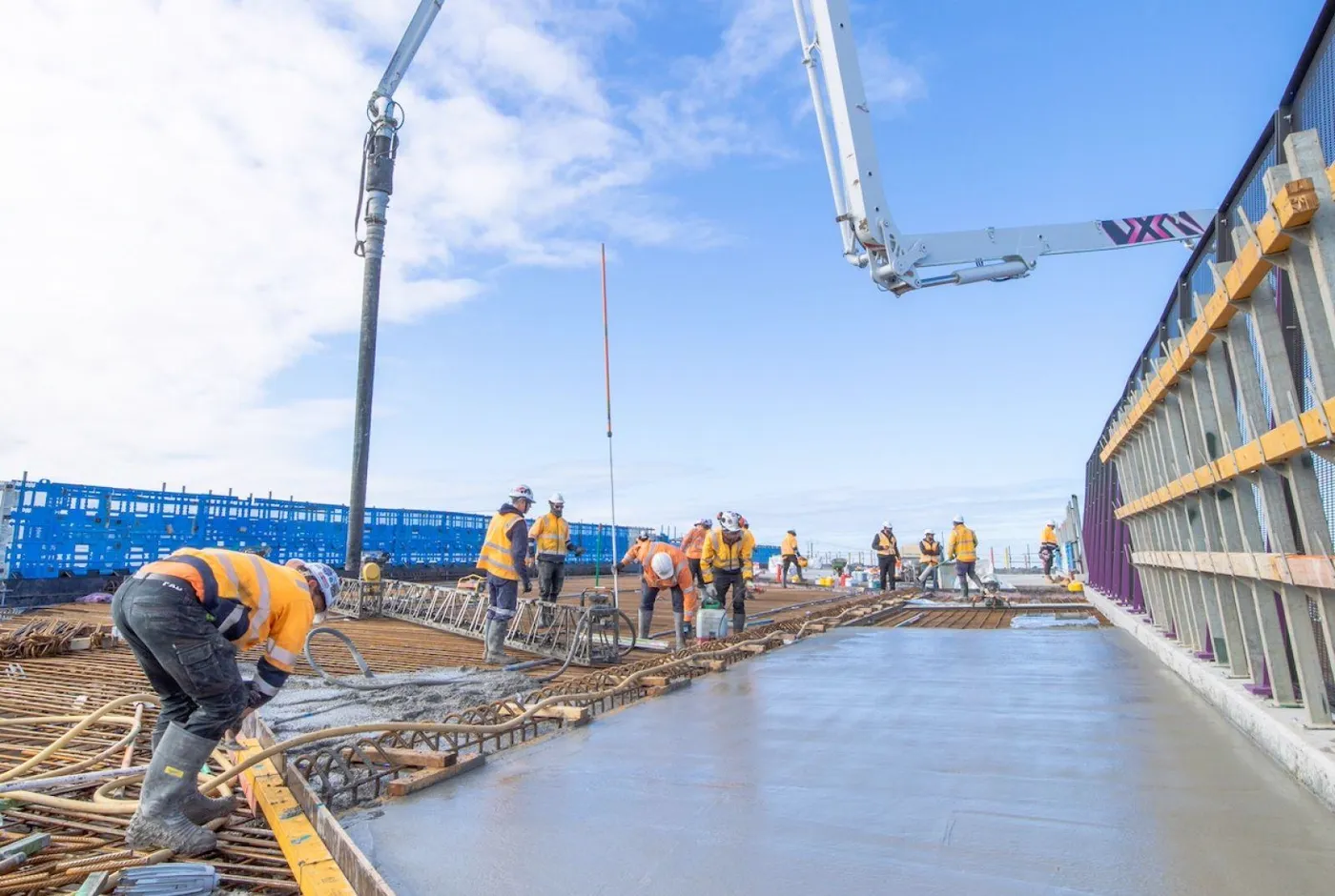
On a major construction project, collecting concrete data is only part of the job. The harder task is turning that data into clear, consistent and traceable concrete QA documentation — a project record that still makes sense long after the pour.
When a question is raised weeks, months or years after a pour, the project team should not have to search through disconnected emails, dashboard screenshots, handwritten notes and folders with inconsistent names. It should be able to identify what was installed, where it was installed, what the concrete did during curing, which milestones were recorded and who received the information.
That is the difference between having sensor data and having structured concrete QA documentation. A repeatable reporting process strengthens project controls, supports engineering review and creates a permanent record that can be followed from pre-pour planning through to handover.
What does “traceable” concrete QA documentation mean?
Traceability means the information for a nominated pour can be followed through a clear chain of evidence. The record should connect the monitored element to the agreed scope, sensor locations, installation evidence, timestamps, collected data, relevant notifications and final reporting. A reviewer should be able to understand what happened without relying on the memory of the person who was on site that day.
For concrete monitoring, a traceable record will generally answer:
- Which project, structure, element and pour was monitored?
- What mix and pour information was supplied for the monitoring scope?
- Where were the sensors positioned?
- When were the sensors installed and the concrete placed?
- Was installation evidence captured?
- What temperature, maturity and estimated strength trends were recorded?
- Were agreed milestones or exceptions communicated?
- What assumptions, limitations and project-specific requirements applied?
- Who prepared, reviewed and received the final report?
Traceability is not created by adding more pages. It is created by maintaining a consistent link between the physical pour, the monitoring data and the project record.
Why concrete QA records become fragmented
Concrete delivery involves multiple parties. Depending on the project, the information may be spread across the builder, concrete supplier, testing laboratory, formwork or post-tensioning subcontractor, engineer and monitoring provider.
Each party may hold one part of the record:
- the builder holds the inspection and test documentation;
- the supplier holds batch and delivery information;
- the laboratory holds test results;
- the site team holds installation photographs and pour details;
- the monitoring platform holds temperature and maturity data; and
- the engineer or authorised project professional holds the relevant review or decision record.
Without a defined workflow, those records can remain disconnected. The data may exist, but the audit trail is weak and the site team carries the administrative burden of reconstructing it later.
The problem becomes larger when monitoring is repeated across numerous pours. Inconsistent naming, sensor placement records, reporting formats or communication pathways can make one pour difficult to compare with the next.
What should a structured concrete monitoring report contain?
A useful report must do more than reproduce a dashboard. It should give the project team enough context to interpret and file the record correctly.
1. Project and pour identification
Every report should clearly identify the project, nominated element, pour reference, relevant dates and report version. This is the foundation of document control.
2. Agreed monitoring scope
The report should state what was monitored and for what purpose. That may include strength-maturity trends, internal temperature, thermal differential or agreed milestone thresholds.
The scope should also make clear what sits outside the monitoring provider’s responsibility. Final decisions about stripping, stressing, loading and sequencing remain with the client and appropriately qualified or authorised project professionals.
3. Sensor layout and installation evidence
Sensor identification and location should be documented so the data can be connected to the monitored element. Depending on the scope, this may include a marked-up layout, installation photographs, sensor references and placement notes. A graph without a reliable location record has limited value when the pour is reviewed later.
4. Time-stamped monitoring data
The record should present the relevant data over the agreed monitoring period. Clear graphs and summaries can show temperature history, maturity development, estimated in-place strength trends and thermal differentials where included in scope. This is where wireless concrete sensor monitoring and, on larger placements, mass concrete temperature monitoring feed directly into the documented record.
The maturity method uses the relationship between a concrete mix’s temperature history and strength development to estimate in-place strength. It must be supported by an appropriate strength-maturity relationship for the relevant mix and applied in accordance with the project specification, approved methodology and verification requirements.
5. Milestone and exception communications
If the service includes milestone or exception notifications, the final record should show the agreed thresholds and when relevant communications were issued. This closes an important gap between collecting data and using it during a live program. A dashboard that nobody is responsible for watching does not provide the same project control as a managed notification workflow.
6. Review status, assumptions and limitations
The document should show who prepared and reviewed it, its issue status and any limitations relevant to its use. This avoids a monitoring report being mistaken for a structural direction, compliance certificate or approval that it was not intended to provide.
7. A controlled final record
The final report should be issued in a stable format suitable for the project’s document-control system. File naming, revision status and distribution should be consistent across nominated pours.
From the physical pour to a permanent project record
- 01Nominated pour
- 02Sensor layout
- 03Installation evidence
- 04Live monitoring
- 05Milestone record
- 06Controlled QA report
How managed monitoring improves the concrete QA trail
Buying sensors does not automatically create a reliable monitoring process. Someone still needs to coordinate the scope, confirm the monitoring plan, install and verify the sensors, watch the data, communicate agreed milestones and prepare the record. If these responsibilities are divided between people who are already managing the pour, documentation quality can vary from one shift or structure to the next.
A managed concrete monitoring process establishes one accountable workflow:
- Pre-pour planning: confirm the element, monitoring objectives, sensor layout, mix information, project contacts and reporting requirements.
- On-site deployment: install and verify sensors within the agreed scope and capture installation evidence.
- Active monitoring: collect and oversee temperature, maturity and differential trends throughout the nominated period.
- Project communication: issue agreed milestone and exception notifications to the nominated team.
- Structured reporting: consolidate the scope, field evidence, monitoring results and review status into a controlled report.
- Permanent record: provide a consistent file for engineering review and inclusion in the project QA system.
The value is not simply the sensor. It is the continuity from the physical installation to the final traceable record. Teams new to the workflow often start with a pilot pour before rolling the process out across a program.
Maturity monitoring should complement the project’s compliance regime
Concrete maturity monitoring and conventional testing serve related but distinct purposes. Laboratory testing provides results at specified test ages and remains part of the project’s nominated compliance framework — see our explainer on concrete cylinder testing. In-situ monitoring provides continuous visibility into how the actual concrete element is developing between those test points.
When correctly planned, calibrated and applied, maturity information can support conversations about program-critical activities such as formwork removal, post-tensioning, loading or opening to traffic. ASTM C1074 describes the use of maturity to estimate in-place strength for critical construction activities, while Austroads maintains an Australian technical specification for estimating concrete strength using the maturity method.
However, monitoring data should not be treated as automatic permission to proceed. Its use must align with the contract, project specifications, approved quality plan and directions of the relevant engineer or authorised project representative.
The strongest system is not “sensors versus cylinders”. It is a documented monitoring workflow operating alongside the specified testing and approval regime.
What project managers should ask a concrete monitoring provider
Before appointing a provider, ask how the entire record will be delivered — not only which sensor will be used. Key questions include:
- Who is responsible for pre-pour planning and sensor placement?
- Who installs and verifies the sensors on site?
- Who monitors the data during the agreed coverage period?
- What happens if data stops transmitting or an exception is identified?
- How are milestone notifications issued and recorded?
- What field evidence is included in the final report?
- How are report versions, review status and limitations controlled?
- Can the provider deliver the same process consistently across multiple pours and locations?
- How does the monitoring workflow integrate with laboratory results, engineering review and the project’s existing QA system?
These questions separate a technology purchase from a managed project-control service.
From live data to a permanent project record
Major projects do not need more disconnected information. They need reliable evidence that is collected, communicated and documented through a repeatable process.
NAORA provides a managed concrete sensor monitoring and QA service for Australian construction projects. We coordinate pre-pour planning, on-site sensor installation, active monitoring, milestone communication and structured reporting across each nominated pour.
The result is clear visibility during construction and a consistent, traceable record prepared for the client, project team and nominated engineer. Planning an upcoming pour? Discuss an upcoming pour with our team.
NAORA is a technology-independent provider of managed concrete monitoring and traceable QA reporting across Australia.